
The Incomplete Guide to Dune and dunes
In which we take you through the history of Frank Herbert’s main legacy, and the history of our beach holidays


Dune: Part Two
— Elliot Wengler
Dune: Part Two is a masterpiece. It feels like a moment in cinema. It deserves to be as loved as Lord of the Rings, just for its sheer ambition.
Dune, for the unaware, is a franchise born of a best-selling novel from 1965 by Frank Herbert. A young man called Paul Atreides gets caught in a whirlwind of prophecies and galactic warfare when his family is given the stewardship of Arrakis, a desert planet, and the source of the Spice Melange, the all-powerful substance that powers the empire’s space travel, and perpetuates life.
Its journey to the big screen was once troubled, but under the watchful eye of visionary director Denis Villeneuve it became a seamless, intelligent blockbuster that looks and feels real. Why did it take so long
An Incomplete History of Dune on screen
The book is a complicated and challenging read (hello, 896 pages, including a glossary). There are so many characters, and although Paul is the journeying hero, most of the book is driven by the internal monologues of everyone else watching the action and chaos.
But he also excelled at writing damn good action. The books became a cultural phenomenon, selling almost 20 million copies, and becoming one of the most successful science fiction books of all time. More novels followed, spanning hundreds of years.
Unfortunately, adaptations to the silver screen were not so successful. Alejandro Jodorowsky failed to contain his 10-hour Dalí vision after acquiring the rights in 1974. In a pre-Star Wars world, nobody could work out the cost of such a visual FX-heavy piece. A 2013 documentary, Jodorowsky’s Dune, covers what could have been in great detail.
In 1976, Italian producer Dino De Laurentiis turned to David Lynch, fresh off of The Elephant Man, after working with Ridley Scott fell through due to family issues. Lynch subsequently loved the book but also felt this was at least a 4-hour film to cover the story and characters properly. A troubled shoot in Mexico was followed by a troubled edit: the studio demanded a conventional 2-hour film. 1984’s Dune was made for $40m, and only made $37m at the box office. Universal’s hopes for ‘Star Wars for adults’ were dashed.
In 2000, the Sci-Fi Channel funded a forgettable 3-part adaptation, then a sequel series based on Dune Messiah and Children of Dune. It starred Alec Newman as Paul, who has disappeared into bit parts ever since, but William Hurt, Iain McNeice, and James McAvoy outlasted its memory.
Enter Villeneuve
Denis Villeneuve had always wanted to do Dune, and never watched the Lynch version. He had dreamt of making sandworm-riding work on screen. He had many critically acclaimed prior successes, but 2016’s Arrival catapulted him into the mainstream. Blade Runner 2049 cemented Villeneuve’s reputation for making big-scale event cinema work.
Villeneuve signed on to direct Dune in January 2017, a week after earning a handful of Oscar nominations for Arrival. It filmed in 2019, and should have been in cinemas in 2020, but was delayed by the pandemic to 2021. Dune, which did not indicate in its title or any pre-publicity materials where it would cut the story in two, made $405m at the box office, and enjoyed a huge audience on HBO Max, where it had a simultaneous release.
The boldest thing about it, beyond the choice to attempt a notoriously and physically difficult story to film, was it was made before Part Two was greenlit. It did the business, and Warner Bros now sees Dune as a returnable franchise. Not bad for a strange philosophical science-fiction epic from 1965.
The Second Part of Dune
It is very much Part Two. There’s no time to summarise or properly catch viewers up with 2021’s Dune. Elements that were cut from the first half of the story are neatly slotted in and around the story of Part Two. Whilst Princess Irulan’s journals and readings are not fully restored, the choices kept in establish her vulnerability, knowledge, and capabilities. Neat storytelling choices are made throughout to compensate for Part One cuts and the world feels full for it.
This isn’t to say that Dune: Part Two races through its plot, nor patronises its audience with heavy George Lucasian expository dialogue. Every character has a distinctive voice. It’s all serious. The joy is not in characters being snappy and finding funny ways to talk about their adventures but in the purity of the film’s story and belief in these characters.
Conflict between every possible pairing of characters is handled deftly. After fleeing the massacre of the rest of House Atreides at the end of Part One, Paul and his mother, Lady Jessica (Rebecca Ferguson), need to find a way to survive and restore themselves, whilst Emperor Shaddam (Christopher Walken) and the Harkonnens seek to consolidate their power over Arrakis.
Lady Jessica wants to prey on the fears that the indigenous Fremen of Arrakis have about prophecies; Paul wants to be part of the Fremen as a genuine fellow warrior. Everyone is in conflict. Paul and Chani (Zendaya) have a love story fed by a genuine embrace of another’s cultural differences.
Meanwhile, plots against the Atreides are even worse than Paul and Jessica feared. The Bene Gesserit (led by Reverend Mother Charlotte Rampling) have disowned Lady Jessica, and seek to work with Princess Irulan (Florence Pugh) to control the great houses before their alliance leads to war. The Harkonnens, unsuccessful in their attempts to quash the Fremen, resort to allowing Feyd-Rautha (Austin Butler) to take control of their operations, despite his sardonic and downright psychotic tendencies.
It’s a lot, but it’s all worth it. Part Two’s first act spends much time on the sandy dunes, beholding Paul’s hero’s journey, that when the time comes to cut to elsewhere, the visionary sequence introducing Feyd-Rautha proves simultaneously a welcome break from Arrakis, but also a spectacular nightmare. The Harkonnen homeworld is all black and white, with creepy fireworks spluttering against the sky. This is how you do psychedelic cinema. Colour becomes part of the story, driving your attention to key details, and setting the tone.
All Seeing is All Believing
The performances are all Academy Award-worthy. Dune did get recognised in 2022, but not for its performances. Timothée Chalamet has to carry much of the picture, and has a full range, from fury to carefulness and guarded empathy. You think you know Paul, but… do you? Chalamet doesn’t overdo anything, bringing this down-to-earth messiah, making you forget he was a crazy chocolate magician mere weeks ago.
Rebecca Ferguson is outstanding, with a performance full of fear, yet fear-inducing; and should get nominated for this. Austin Butler is underused but absorbs the camera with his smarmy, bullish eyes. He’s a physical force as capable and domineering as Tom Hardy’s Bane, but with a slim build; it’s quite something.
There’s been some talk about Christopher Walken being the odd one out, just doing his usual act, but I genuinely think this is the most understated and delightful performance of his career. Emperor Shaddam is scary not because he’s all-powerful, but because he’s a real, frail, but sinister old man.
I found the action sequences jaw-dropping. There’s a possibility that they won’t overwhelm others, because more fantasy and science fiction is shoved into our retinas than ever, but this is worthy and exciting. There’s everything from tense stealth sequences to battles on the scale of the Roman Empire. Whilst I’m making that comparison, do check out the allusions between Dune and the Romans in The Rest is History’s episode about Star Wars; one of their funniest episodes.
The scale of the spice raiders against individuals is so well-realised; the worms, one of the strangest concepts to sell, are extraordinary. Move over, Mission Impossible: Tom Cruise jumping off a cliff on a motorcycle was all good and well, but I’ve now had the religiously emotional experience of watching Timothée Chalamet taming a giant sandworm. I don’t want to know if it was real; it felt like it. Nothing feels rushed, nor does anything else feel slow; the pacing is judged perfectly.
If there’s any drawback, maybe there is too much stuff. When I first watched it, I was surprised by just how fast-paced it was, compared to the book, and couldn’t detach myself from some of the changes made. Upon my second watch, I realised I was wrong: this is how to make the story work for its screen time and future stories in the world of Dune.
I haven’t even mentioned the stunning sound design and soundtrack from Hans Zimmer, doing some of his most innovative and wild work. It’s perhaps a bit too loud in places, but you need to see it loud to be absorbed. See this on the biggest screen with the best sound system you have access to.
Dune spent decades with a reputation for being weird and unfilmable. Not even a visionary like Lynch could make it work. No more. Whether it just needed time, faith, technology, or just a damn good cast, Dune: Part Two is pure cinema. If I see a better film this year, I will be shocked. I will remember it forever. And this could just be the beginning.
PS: The Incomplete List of… Nicest beaches we know
Unlike a certain Padawan, we don’t have any issues with sand, as made clear by our enthusiastic endorsement of sand-fest Dune: Part Two. But there certainly are some places that have nicer sand than others, so, here’s our top recommendations for beaches.

1. Stormalong Bay at Disney’s Beach and Yacht Club Resorts, Walt Disney World (United States)
A lot of people traditionally picture beaches as the sandy (or pebbly) spots where you spend time outside of the water. If you’ve clicked the link above, you’ve obviously seen that Stormalong Bay is categorised as a swimming pool. However, and it’s a big however, this swimming pool feels like a miniature water park - including a beach that transitions into the more lively elements, like a waterfall pool. Still, the fact that you can feel the sand under your toes keeps you feeling beachy.
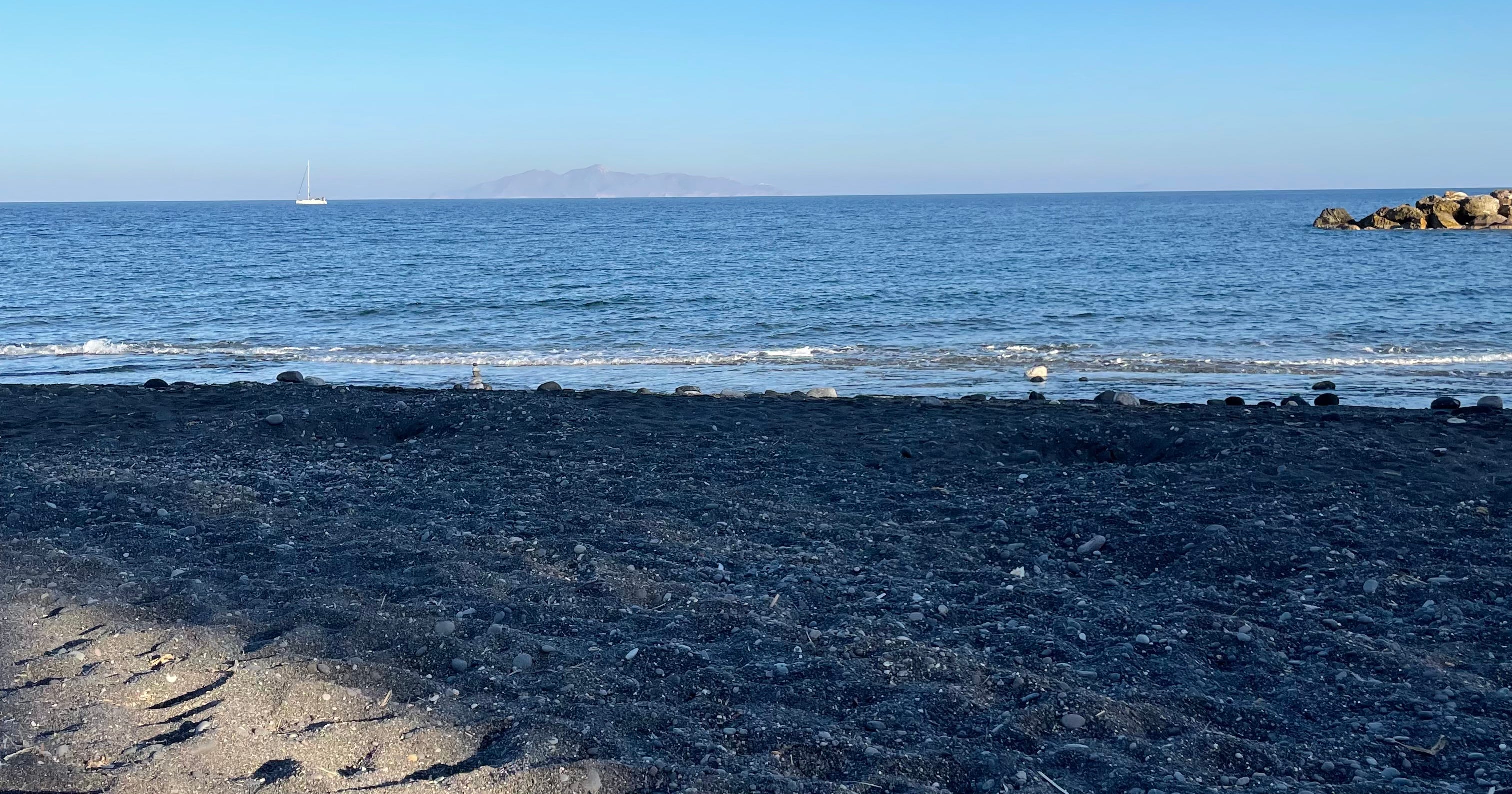
2. Kamari’s “black” beach, Santorini (Greece)
Kamari has much to offer - its historic dig site hosts what Assassin’s Creed: Odyssey would like to tell us is home to Atlantis, for instance. Its black beach is better for folks who have less time. Sure, the sand isn’t legitimately black (the only time we’ve ever seen that was in Sri Lanka, after the 2004 tsunami, so not a great memory). But it’s eye-catching, and this beach is a peaceful place in the off-season. Visit between November and April for low crowds, but also few amenities.
3. Preethipura Beach, Wattala (Sri Lanka)
Colombo itself doesn’t have the best location for beaches - Galle Face and its adjacent “Beach Park” are far too urbanised and inauthentic to qualify for this list. Drive out to Wattala though, and you get more of a view. Colombo’s skyscrapers grace the horizon, but the soft sand underneath feels more than just a couple of miles away from the capital. By now the genuinely black sands of the Christmas Day tsunami have washed away, leaving crystal clear water hugging the pristine beige shoreline.
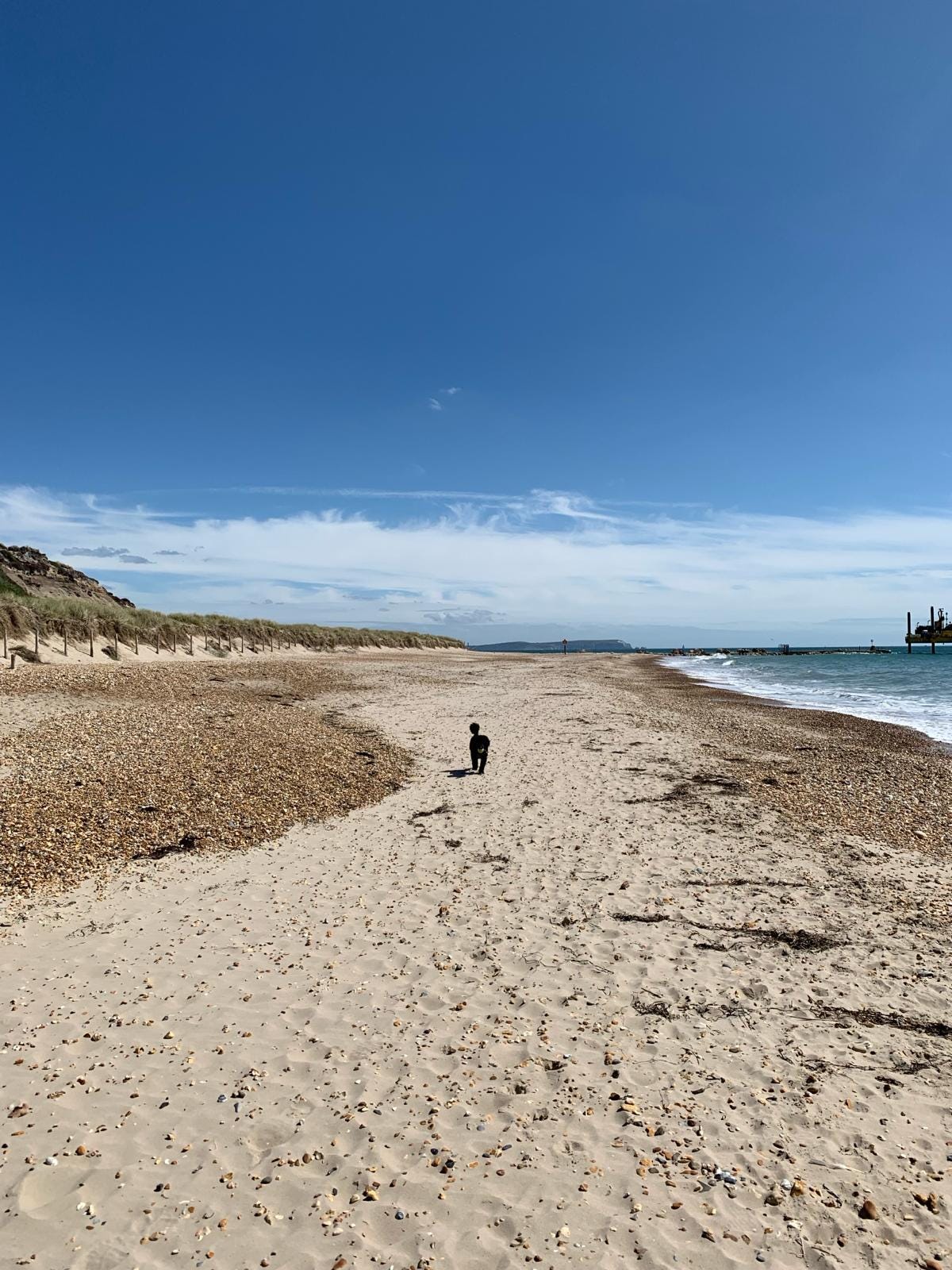
4. Hengistbury Head, Dorset
About two miles east of Bournemouth, is Christchurch, a beautiful little town, which has marshes and a river mouth that connects to Hengistbury Head, a far superior beach to what Bournemouth can offer. It takes nearly an hour to traverse its mile of undisturbed smooth sands and dunes. Its most easterly point offers ferry access to Mudeford Harbour. It’s the most quintessentially English spot, but shockingly desirable, with some of the beach huts, which have no amenities, available for weekly rent of up to £600 a week! Worth the view of its cliff sides full of nature reserves though!
5. Seven Mile Beach, Grand Cayman
There isn’t a whole lot of culture to dig into on Grand Cayman, the largest of the Cayman Islands. Its beaches though? They are spectacular. The Caribbean has truly earned its reputation for white, fine sand and turquoise, yet transparent water. Seven Mile Beach is walkable, providing several hours worth of beachcombing entertainment, and you can easily swim, or depart on a snorkelling adventure from there. Avoid hurricane season, and ensure you have some kind of shade alongside sunscreen for protection.

Let us know your favourite beaches, to make our list a little more complete!